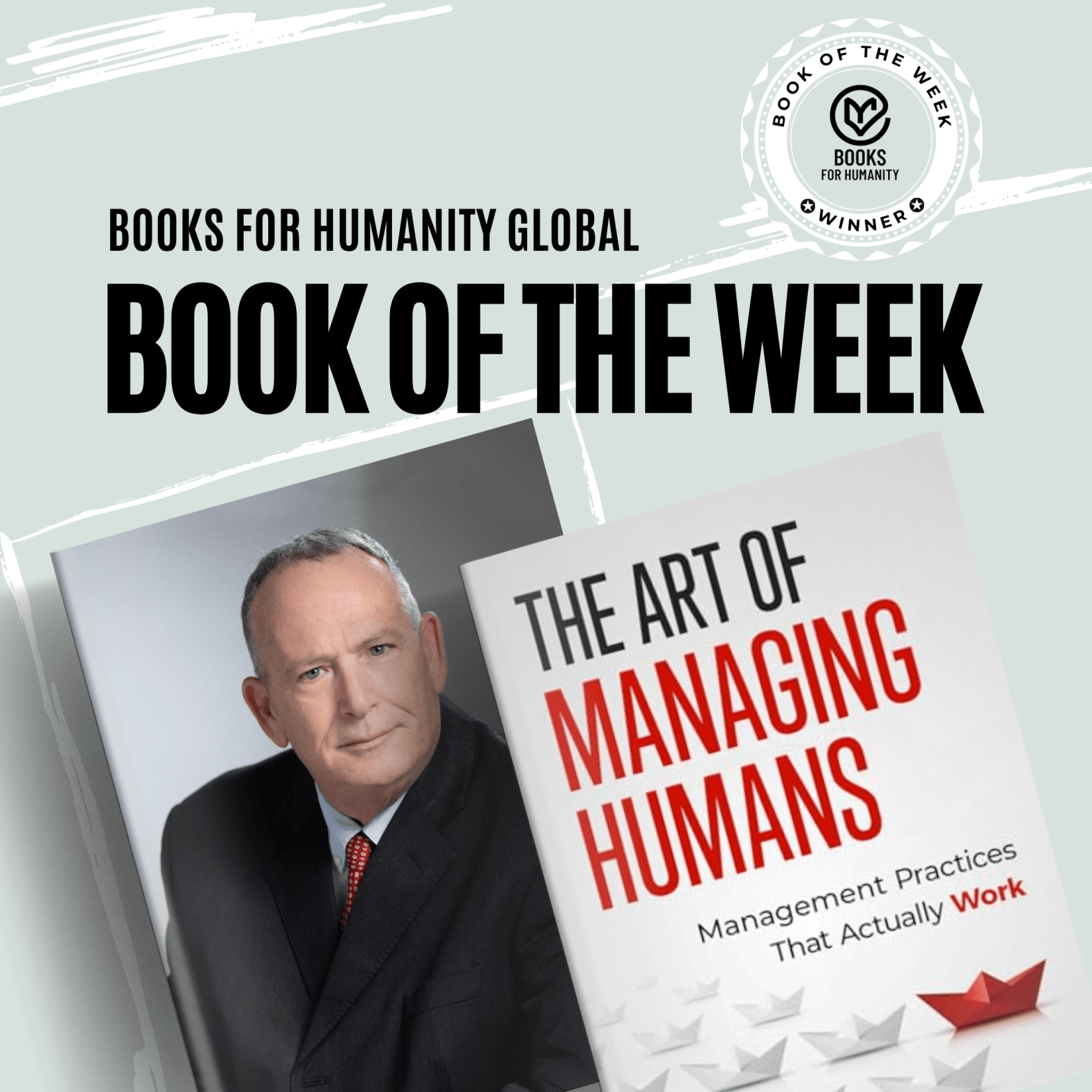
If you’ve ever sat in a meeting and felt the air shift—because someone spoke up, or didn’t—The Art of Managing Humans understands that moment. This isn’t a book about how to “run” people. It’s a book about how to work with them, in real time, with real consequences. Tsvika Abramovitch draws from decades of field experience—not spreadsheets or slogans—and what emerges is something closer to field anthropology than a typical leadership manual.
Rather than start with theories, Abramovitch starts with practice: he led teams, faced mutinies, coached managers, and stayed up through more than a few sleepless nights. He developed what he calls the “Seesaw Model,” and though it sounds gentle, it’s grounded in the weighty reality of human tension. Like an actual seesaw, the model thrives on motion, tension, and balance. What’s brilliant is not the metaphor, but the lived detail: how transparent communication during layoffs changed the emotional tone of an entire branch, how roundtable conversations defused brewing resentment, and how a strike was handled with neither panic nor aggression—but with strategic poise that turned confrontation into restructuring.
A lesser book might rely on clever phrases or motivational stories, but here, emotional intelligence is earned, not asserted. The tone is pragmatic but compassionate. There’s no magical thinking, no promises that everyone can be “transformed” into an ideal employee. Instead, Abramovitch focuses on what can be influenced: relationship habits, structural incentives, the daily cadence of trust-building.
Scientific research consistently shows that people don’t leave companies—they leave managers. This book quietly reinforces that truth through anecdotes that never quite resolve cleanly, because human relationships don’t tie up in bows. At one point, a call center sees an 80% staff turnover rate. The solution? Not perks. Not policies. A shift in how direct managers engaged with team members on a personal level. That scene alone could teach a semester of business school.
There’s plenty here for organizational thinkers, but this is not for readers looking for checklists or formulaic shortcuts. It’s for those willing to pause, rethink, and reenter conversations with more context and less ego. People who believe that meetings should be efficient won’t like how much Abramovitch values listening over resolution. Readers who already suspect that good management looks a lot like mentorship will find themselves nodding throughout.
This isn’t a book for beginners who want rules. Nor is it for command-and-control managers hoping to retrofit compassion into a rigid structure. It’s for those in the middle: leaders who know that every decision shapes a relationship, and every relationship shapes outcomes.
There are no superheroes in these pages—just professionals choosing, sometimes imperfectly, to lead with awareness. The fact that Abramovitch writes with warmth but no self-congratulation makes the lessons land all the harder. The Art of Managing Humans might not change your philosophy overnight. But it will change the way you interpret your next team meeting. Or silence. Or raised eyebrow. And for that, it earns a permanent place on the desk—not the shelf.
Books for Humanity Global’s Book of the Week Award
Yes, this book deserves the Books for Humanity Global’s Book of the Week Award. It is not only highly rated—it is exceptional. It shifts the culture of leadership away from control and toward connection. The book makes a quiet yet vital case for dignity in the workplace—dignity not as a buzzword, but as a shared foundation. Its universal appeal, inclusive tone, and actionable compassion make it worthy of global recognition.
About the Book of the Week Award

Discover our carefully chosen Book of the Week—a compelling read that offers fresh perspectives and enriches the human experience. Here, we highlight a unique book that captures the essence of storytelling, whether through gripping narratives, thought-provoking themes, or inspiring characters. Get into our selection and explore why it’s a must-read for book lovers across the globe. Don’t miss out on our picks that celebrate the power of literature to connect, uplift, and transform.
To nominate a book for the award, visit our Awards page.
General Site Disclaimer
The content on the Books for Humanity Global website is for general informational purposes only. We do not provide medical, legal, financial, or professional advice. Opinions expressed in reviews and articles are those of the authors and do not represent the official views of Books for Humanity Global. We are not liable for any decisions or actions taken based on the information provided. External links are for convenience only, and we are not responsible for their content.
For more details, please read our full Disclaimer, Privacy Policy, and Terms of Service.
Your continued use of the site constitutes acceptance of our policies, terms, and conditions.
Useful Links
- About Us
- Authors for Humanity
- Blog
- Book of the Week
- Book Offers
- Book Review Request Step 3
- Book Review Requests
- Book Wish List
- Contact us
- Disclaimer
- Our Sponsors
- Privacy Policy
- Subscribe to our newsletter
- Terms of Service
- Voices for Humanity
More from Books for Humanity Global

Lessons from Timeless Books: Empathy, Trust, and Moral Action
Can a simple story, a leadership book, or a hard-earned lesson quietly reshape how someone leads and treats others? This…
Keep reading
Ways to Use Books and Learning Initiatives in the New Year to Drive Meaningful Change in Underserved Communities Worldwide
What if finishing a book mattered less than what you did with one page of it? This roundup explores how…
Keep reading
How Christmas Stories Build Empathy
Why do stories told at Christmas linger longer in our hearts—and quietly change how we treat others afterward? Read on…
Keep reading
Book Review: Gray Wrath by Terrence Poppa
Gray Wrath is a stark reminder that even in the face of extinction, the bonds of survival, redemption, and unity…
Keep readingSomething went wrong. Please refresh the page and/or try again.
Discover more from Books for Humanity Global
Subscribe to get the latest posts sent to your email.

 Books for Humanity Global