Content Warning: This interview includes references to fantasy violence, morally complex characters, political intrigue, and mature themes such as murder and criminal organizations. Reader discretion is advised, especially for younger audiences or those sensitive to darker story elements.
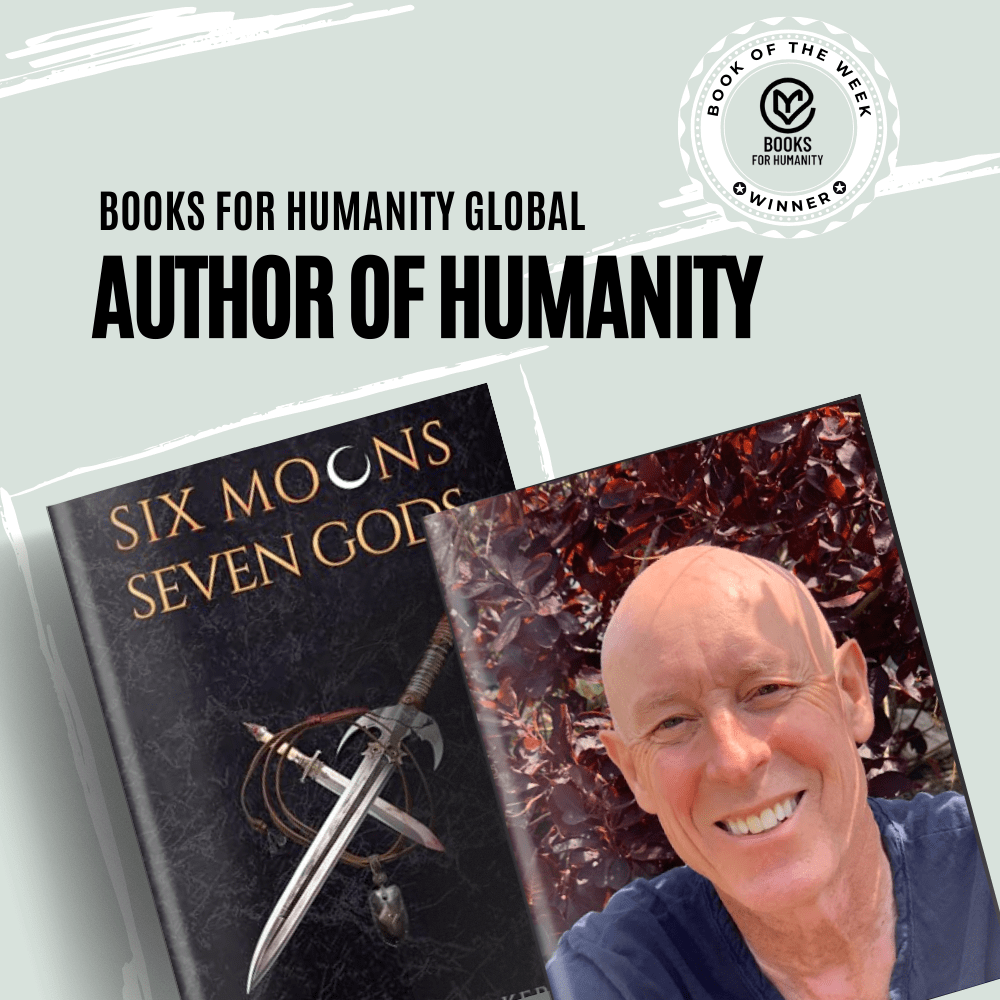
Robert A. Walker, multi-award-winning author of Six Moons, Seven Gods, shares insights into his writing process, character development, and the creation of the fantasy world of Baelon. In this interview, Walker discusses thematic influences, his transition from government work to fiction writing, and the role of reader feedback in shaping his work.
Robert, thank you for joining us today. Before we look into the world of Baelon, could you please tell our readers more about yourself—your background, your creative journey, and what you hope to achieve through your writing?
I grew up in a small town in Northwestern Massachusetts. My father was a professional editor, so I guess an affection for the written word has always been in my blood. My fifth-grade teacher read a short story I wrote to my entire class when I was 10, and I was so, so proud. I’ve been wanting to write novels ever since, but my career path took me in other directions. I enjoyed a decades-long career in local government, and although it required lots of writing and editing, it’s only since retirement that I’ve found sufficient time to write extensively for pleasure.
I’ve been happily married to the same woman for over 30 years, and together we’ve raised three marvelous children into adulthood. Empty nesters now, we live on the Pacific Coast with our two dogs (a Labradoodle and an Australian Cobberdog). I’ll take chocolate over vanilla, talk instead of text, and tennis over any other sport. And at the end of the day, there’s nothing better than a hot fudge sundae, right?
What do I hope to achieve with my writing? I write to entertain, not to educate, inform or persuade, so my greatest hope is that people will curl up in an armchair with my book and a cup of coffee or hot chocolate and find themselves enthralled by a world and story that I’ve created. It’s as simple as that!
What inspired you to write Six Moons, Seven Gods, and what themes were you most drawn to explore?
As a young boy, I read all of Zane Grey’s westerns, and I was obsessed with Ian Fleming’s James Bond series. While they weren’t fantasy writers, they certainly enjoyed thrilling their readers, and I’ve since appreciated most of David Baldacci’s works. Frank Herbert and J.R.R. Tolkien introduced me to the world of fantasy, and I did love the movie Camelot. Later in life, I thoroughly enjoyed Scott Lynch’s Gentleman Bastard fantasy series.
As a young man touring my mother’s homeland, England, I was fascinated by medieval castles, Stonehenge, and the rich history of that country. While in college, I took elective classes in creative writing, as well as human behavior.
My relationships with family members and friends no doubt color my writing as well. And let’s not forget co-workers and the work environment; you’d be surprised how much drama, intrigue and suspense one encounters in local government—more than enough to help fuel fantasy novels!
I suppose a bit of all that helped to inspire The Legends of Baelon. I didn’t sit down thinking I was going to write in any particular genre, but when I did put creative pen to paper, Six Moons, Seven Gods is what flowed out—fantasy, with tinges of grim dark and romance. As far as themes go, I’ve been most drawn to murder, revenge, courage, friendship and honor.
How did you approach building the Guild of Takers, and were there any real-world influences behind its creation?
The initial drafts of Six Moons, Seven Gods started with a master thief, Reynard Rascall, searching for an employee he believed to be skimming from his books. But the more I got to know Rascall, the more important it became to describe the criminal organization he belonged to: a group so dark and sinister that he worked to keep them in the background of his life and out of his daily affairs. The Guild of Takers supreme leader, The Magister, quickly evolved into a key figure, his murderous plot to further control the politics and economy of Baelon overshadowing Reynard’s thievery.
While the Guild is not reflective of any particular real-life organization, it does embody the worst of those who put money and power above all else.
The book blends timeless political dynamics with fantasy—how did you balance intrigue and relevance?
This may sound like an oxymoron, but I’m trying to write believable fantasy. So the relationship between innovation and familiarity, intrigue and relevance, is indeed a balancing act—the plot needs to be exciting, and the world building needs to be sufficient to allow the reader an entertaining escape from their reality. But, and this is the challenge for me, both plot and world building need to be believable—that is, somehow grounded in the reader’s own reality. That might mean touching on politics, but it might just as well be love, or greed, or hope. Universal themes such as these are what allows the reader to really immerse themselves in the experience and invest in the characters and their story. So what’s really rewarding to me, is when a reader says “wow, that was different, but it could happen, yes?”
I’m not criticizing things like heavy magic, which often allows a character to escape dire predicaments suddenly and with little explanation. There’s an audience for that; it’s just not mine. My father was one of my beta readers. He digested each chapter of Six Moons, Seven Gods as soon as it was drafted. Midway through the novel, he said to me, “I’m really intrigued by this Marie Dunn character and her ability to see into the future, but before the story ends, you’d better explain what enables her to do that—and it better be good—because otherwise I’m going to be dissatisfied.” That feedback caused me a good number of sleepless nights, but it was also the genesis of euphoria, The Sisters of Systalene, and the background to Madam Dunn’s unusual ability.
Why did you choose to look into the idea of self-governance versus monarchy, and what reflections do you hope readers have?
It was a bit of happenstance, really. I was writing the scene where The Guild of Takers plots to murder Baelon’s two kings, and I really wanted it to last a while. It was an important opportunity to introduce the guild’s supreme leader, The Magister, and the various members of his High Order. So I embraced the notion of a debate between those characters as to how best to further embroil themselves in the politics and economy of their world. Maybe I’d just been watching too much of our nation’s politics at the time, but it occurred to me that the inherent differences between monarchies and democracies might provide an interesting platform for the guild’s discussion. No matter which side of the political aisle you sit on, the pros and cons of each form of government are rather fascinating to explore—entertaining, in fact, in the context of a fantasy novel!
How do you shape morally complex characters without glorifying their darker actions?
That’s a great question, because I think books and movies do that constantly. To some degree, the audience suspends its social mores to allow likeable characters to get away with things society frowns on. Who do we root for when watching The Italian Job? The thieves, of course, because we grow to love their characters so much. I actually try not to cross that line. But people are, in fact, complicated, and not every villain in my books is rotten to the core. That wouldn’t be realistic. In fact, one of the primary villains in Six Moons, Seven Gods has some very admirable traits. Many of my readers have written to say they’re drawn to him despite his moral shortcomings. That just reflects the complexities of the real world. But I try to stop short of glorifying his despicable acts. I don’t ask my readers to cheer for those or excuse his shortcomings, which are as evident as his charm.
Can you walk us through your process for world-building and story structuring in the novel?
The first draft of Six Moons, Seven Gods was so poorly written my editor couldn’t decide whether it was historical fiction or fantasy. She advised me that if I was going to write fantasy, I should step away from the novel and first create a “world-building bible.” So I did just that—I developed an alternate universe with its own government, food, flora and fauna, social mores, etc. It wasn’t entirely fleshed out when I began to write again, but it served as a solid foundation on which to base The Legends of Baelon, and adding to it seemed quite natural as the story line progressed. When writing fantasy, the opportunities to world-build are endless, and honestly I’m still learning to hone that craft.
And credit where credit is due: Much of the inspiration for the world of Baelon came from beta readers who pushed me to describe in ever greater detail its unique environment and attributes. This was my first foray into world building, and they helped me to appreciate its immense potential. Now I find it quite enjoyable and a great way to embellish my stories.
With regard to story structuring, some folks like to outline everything in advance whereas others write by the seat of their pants, creating the story as they go. I work both ways. I don’t want to be too restricted by a formal outline, but I have found it helps to have a general sense of where things are going. My first draft of Six Moons, Seven Gods was strictly write-as-you-go, and that got me into trouble on several occasions, as I would write my characters into predicaments even I could not help them escape! Writing a series helps, of course; Six Moons, Seven Gods left several loose ends begging for a sequel, so a general plot direction was already provided for Two Crowns, Three Blades, and many of the characters were already well-developed.
If you’ve received awards or recognitions, could you share which ones stood out and what they mean to you?
While writing, I’m fairly confident in my ability to distinguish good work from bad; i.e., I know when I’ve written a passage that doesn’t measure up as opposed to something worthwhile. But one can write a thousand decent paragraphs and still fall short of a good story with interesting characters and a compelling plot.
So when I finish a novel, no matter how I’ve felt about it during the course of writing, there’s always a certain amount of self-doubt that can only be erased by positive feedback from unbiased reviews–from folks who know the craft and understand what readers are looking for.
I typically apply for awards well before the book is released by submitting what’s called “advanced reader copies” for consideration.
I’ve been very fortunate to date. Both Six Moons, Seven Gods and Two Crowns, Three Blades have won multiple awards. They all stand out to me. More than anything, they are a welcome relief–an affirmation that what I’ve created is worth reading and likely to entertain at least a certain segment of readers. They also inspire me to stay the course and keep writing!
What was an unexpected lesson or moment that stood out during the writing process?
I’m embarrassed to say I wrote the entire draft of my first novel without sufficient awareness of the various narration perspectives authors have at their disposal. The story drifted back and forth between them, suffering as a result. Once I was better introduced to, and became familiar with, third-person-close, I was hooked, and the story really took off. I love writing from that perspective because it allows the reader into the minds of multiple characters, heroes and villains alike. I think it adds depth and realism to the experience. As the old adage says, “There’s more than one side to a story.” What better way to demonstrate that than by allowing the reader to hear both sides?
What lasting message or experience do you hope readers carry from Six Moons, Seven Gods?
Since I’m writing primarily to entertain, my first wish is for folks to finish the book having enjoyed the story and wanting more. Maybe it’s allowed them to escape their own reality for a short while; perhaps they’ve taken on a new identity or been stimulated by some aspect of another world. If they’ve been moved to laughter or to tears, so much the better.
I suppose if there’s one message I hope they take away it would be that very few things in life are strictly black and white; the world is filled with shades of gray, nothing’s quite as simple as it first appears, and it’s often worth the time to try and sort things out. The same is true of this novel’s plot and its characters!
Disclosure: This interview was conducted as part of a collaborative feature. The content and opinions shared are based on the interviewee’s personal experiences and expertise.
Related
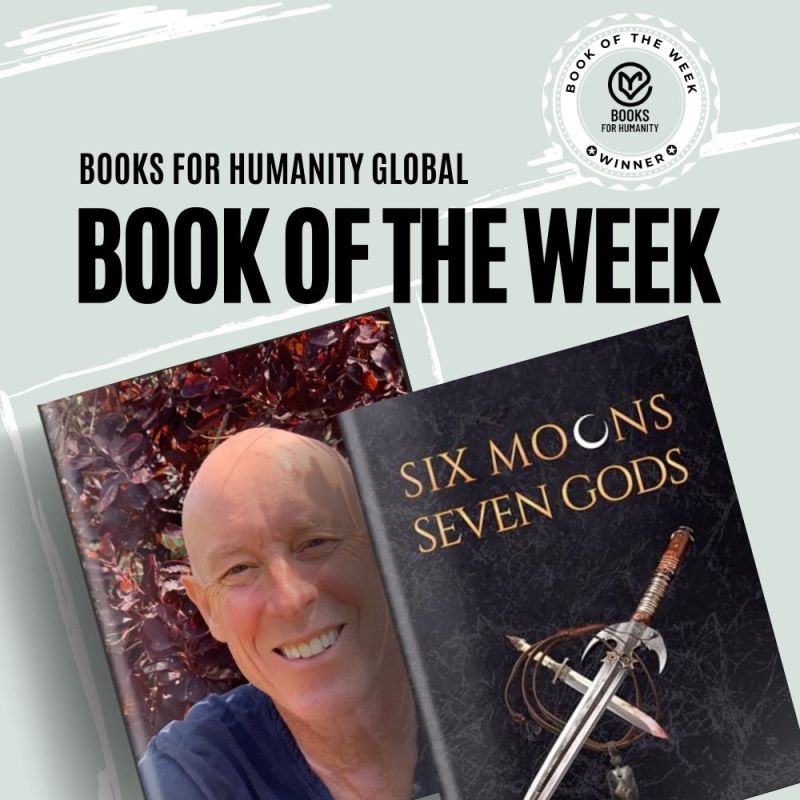
Book of the Week: Six Moons, Seven Gods by Robert Walker
What if the balance of power hinged on six moons and the whispers of unseen gods? Dig into this review of “Six Moons, Seven Gods” by Robert Walker to uncover how ambition shapes a world teetering on chaos.
Share Your Insights
We’d love to hear your thoughts on this interview with Robert A. Walker! Please share your answers to the following:
- What aspect of Walker’s writing process do you find most interesting?
- Which themes in Six Moons, Seven Gods resonate with you the most?
- How do you think his background in local government influences his storytelling?
Feel free to leave a comment below!
General Site Disclaimer
The content on the Books for Humanity Global website is for general informational purposes only. We do not provide medical, legal, financial, or professional advice. Opinions expressed in reviews and articles are those of the authors and do not represent the official views of Books for Humanity Global. We are not liable for any decisions or actions taken based on the information provided. External links are for convenience only, and we are not responsible for their content.
For more details, please read our full Disclaimer, Privacy Policy, and Terms of Service.
Your continued use of the site constitutes acceptance of our policies, terms, and conditions.
Useful Links
- About Us
- Authors for Humanity
- Blog
- Book of the Week
- Book Offers
- Book Review Request Step 3
- Book Review Requests
- Book Wish List
- Contact us
- Disclaimer
- Our Sponsors
- Privacy Policy
- Subscribe to our newsletter
- Terms of Service
- Voices for Humanity
More from Books for Humanity Global

Lessons from Timeless Books: Empathy, Trust, and Moral Action
Can a simple story, a leadership book, or a hard-earned lesson quietly reshape how someone leads and treats others? This…
Keep reading
Ways to Use Books and Learning Initiatives in the New Year to Drive Meaningful Change in Underserved Communities Worldwide
What if finishing a book mattered less than what you did with one page of it? This roundup explores how…
Keep reading
How Christmas Stories Build Empathy
Why do stories told at Christmas linger longer in our hearts—and quietly change how we treat others afterward? Read on…
Keep reading
Book Review: Gray Wrath by Terrence Poppa
Gray Wrath is a stark reminder that even in the face of extinction, the bonds of survival, redemption, and unity…
Keep readingSomething went wrong. Please refresh the page and/or try again.
Discover more from Books for Humanity Global
Subscribe to get the latest posts sent to your email.

 Books for Humanity Global