Content Warning: This interview includes discussion of themes related to death, the afterlife, and self-harm, as explored through literary and poetic expression. Reader discretion is advised. If you’re struggling, help is available—click here to see suggestions on where to seek help.
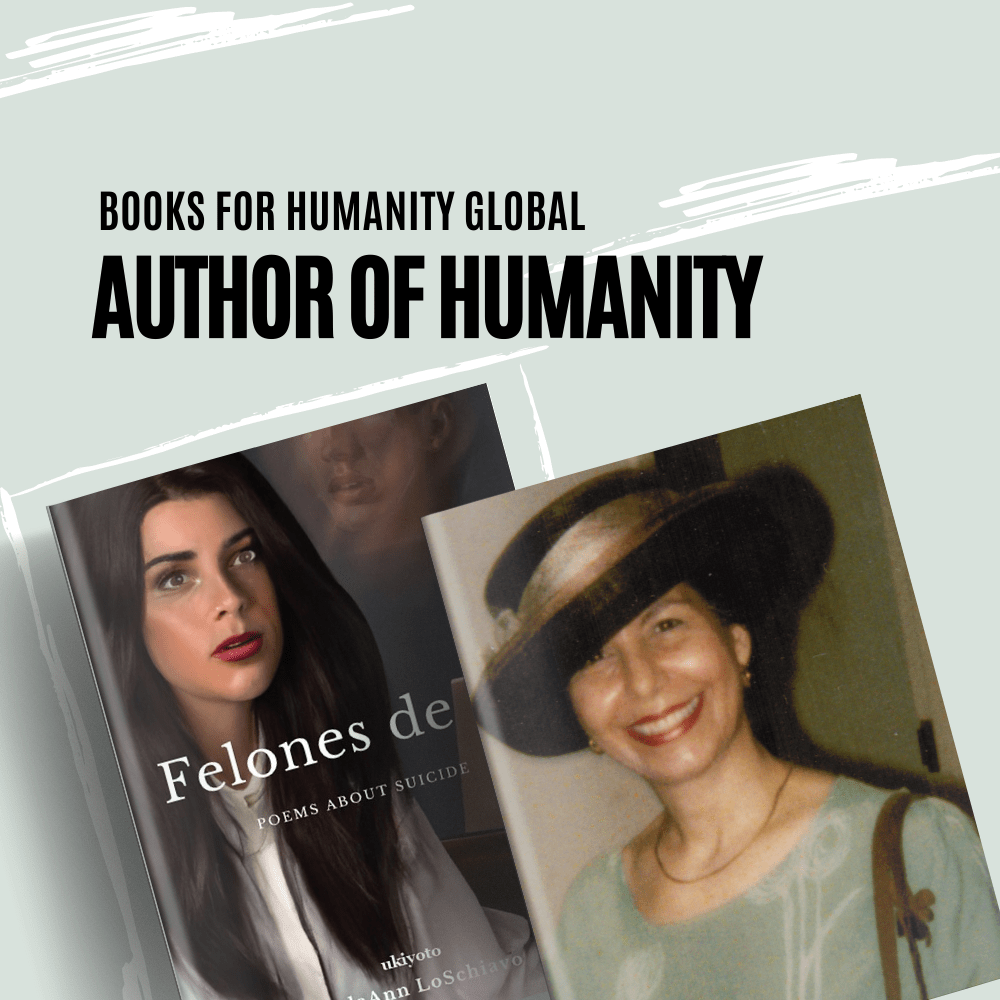
“I write in service to enduring mysteries—violence, injustice, cosmic and internal landscapes, human emotion, mortality, the afterlife—with ghosts as recurring presences born from personal encounters.” With these words, poet and dramatist LindaAnn LoSchiavo, a native New Yorker, captures the essence of her creative journey. Her work is deeply rooted in themes of mortality, injustice, and the unseen—realms she explores with haunting intensity. Her award-winning collection “A Route Obscure and Lonely” earned the Elgin Award in 2020, and in this interview, she talks about her poetic process and the evocative themes that shape her chapbook collection “Felones de Se: Poems about Suicide.”
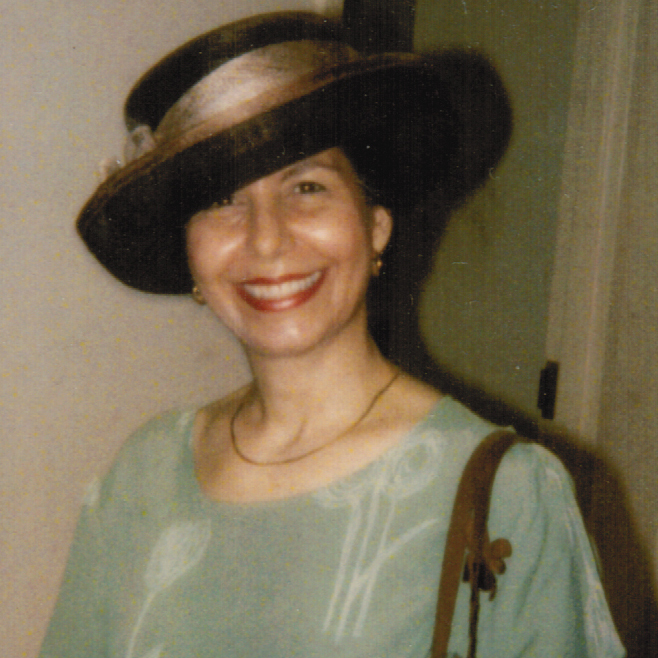
LindaAnn, thank you for being with us today. To start off, could you introduce yourself to our readers—your background, the kind of work you do, and what you aim to express through your writing?
A native New Yorker, I discovered metrical verse at age three when my aunt and I began creating homemade greeting cards—her illustrations paired with my verses tailored to each recipient. By my ninth birthday, I had published my first poem in a school magazine and mounted a one-act drama (written for a cast of five girls) in New York City. The trajectory was clear.
As an adult freelancer, my professional journey began in journalism, with my bylined articles appearing on covers of magazines published by Conde Nast, Hearst, Meredith, and Universal. Gradually, I transitioned to literary writing across multiple forms.
A segment of my formal verse functions as dispatches from the Bar-do—that liminal space I escape to with my imaginative alter-egos and my gothic predilections. These poems serve as messages to my future self, or whatever entity follows. I write in service to enduring mysteries—violence, injustice, cosmic and internal landscapes, human emotion, mortality, the afterlife—with ghosts as recurring presences born from personal encounters.
My work appears widely in literary journals and speculative/horror publications. Nine poetry collections have been published to date, with two additional titles forthcoming this year.
I am an active member of the British Fantasy Society, HWA, SFPA, and The Dramatists Guild.
Tell us about your chapbook. What drew you to its theme? And what does the title signify within the context of the collection?
The Latin term “felo de se” refers to “a felony against oneself”—suicide. This archaic legal classification reflects how suicide was once criminalized, a perspective that resonates with my experience of how these deaths are treated even today. My mini-chapbook “Felones de Se: Poems about Suicide” emerged from deeply personal connections to this somber theme.
In my family, suicides were shrouded in secrecy—shameful acts demanding concealment, not compassion. When my Cousin Joseph LoSchiavo ended his life, his parents tried to hide two aspects of his identity: his homosexuality and the manner of his death. Rebellious even in the afterlife, his spirit refused to go quietly. Instead his presence would appear in my office at noon on Tuesdays—the day we’d always meet for lunch. For years, my memory became the urn that held him. My poem “Tuesdays with the Ghost” extends his legacy, allowing others to hear his story that might otherwise have remained silenced.
The six poems in “Felones de Se: Poems about Suicide” (published in 2024 by Ukiyoto) represent a distillation from a larger work-in-progress titled “Past Tense: Poems and Portraits of Suicide.” Through this collection, I aim to illuminate these hidden histories and honor those whose stories have been obscured by shame and secrecy.
Regarding the mini-chapbook released last year, the legal reference in my title – “felo de se” – suggests both the clinical distance society maintains toward suicide and the deeply personal nature of these acts—a tension I explore throughout both of these poetry collections.
What inspired you to frame your poetry around its themes?
I’m drawn to quieter, introspective moments because they reveal the full humanity that public narratives often simplify. Take suicide reporting, for instance. When newspapers cover a suicide, they typically reduce a complex life to one ailment: mental illness or depression. While these factors may be present, such reductions erase the richness of a realistic profile.
Consider New Englander Conrad Roy III—at just 18, he had earned his captain’s license and secured a position with Boston Duck Tours, achievements that brought him genuine pride. These details matter. They show the individual beyond his mental turmoil.
My poetry attempts to ‘peel the onion’ of these lives—to restore dimension to people who have been flattened by simplistic narratives. I believe poetry has a unique power to illuminate these overlooked emotional landscapes, to honor the complexity of human experience often missed by the headlines. The introspective moments in my work are where I find the most truth about who we really are.
Can you share your process in selecting and arranging the six poems in this chapbook? What shaped their tone and sequencing?
While my longer collection “Past Tense: Poems and Portraits of Suicide” follows a chronological arrangement—spanning from the 19th-century erotic mystic Ida Craddock to the recently convicted neurologist Dr. Ricardo Cruciani— my chapbook “Felones de Se: Poems about Suicide” demanded a different approach.
This chapbook begins with my cousin’s downfall, creating an intimate entry point that shaped the collection’s tone. I then selected five additional narratives that share a particular poignancy: lives interrupted. This wasn’t simply about documenting different methods of suicide (though the variations from carbon monoxide poisoning, drug overdose, and drowning do create a certain rhythm to the collection). Rather, I was drawn to stories that revealed something essential about vulnerability, youth, and potential.
The sequencing creates a deliberate emotional architecture within this concentrated format. Each poem builds upon the last, forming a cohesive meditation on interrupted promise. I wanted readers to experience both the particularity of each person’s circumstances and the universal questions their stories raise about human fragility. The chapbook serves as both a complete statement in itself and an invitation to the expanded exploration found in “Past Tense,” where a broader historical and cultural context further illuminates essential truths.
How do you view the role of poetry in exploring sensitive or less frequently discussed aspects of the human experience, especially in a way that remains grounded and respectful?
The most haunting poetry springs from truth. My work draws from authentic experiences—my mother’s death from cancer, societal injustices, or the brutal realities of suicide, murder, and violence against women. I’ve discovered that when the macabre is anchored in authenticity, it creates a visceral connection that purely fictional horror cannot achieve. Readers don’t merely shiver at my words; they recognize them—experiencing that profound chill of awareness when carefully crafted metaphors and similes illuminate a lived experience. Poetry becomes both witness and medium, transforming difficult truths into art while preserving their essential humanity.
What are the literary, historical, or philosophical elements that helped you shape meaningful poetry without being overtly didactic?
I employ literary, historical, and philosophical elements as emotional frameworks rather than scholarly displays. These references serve as bridges connecting contemporary suffering to timeless human experiences. When I filter a modern suicide through a classical lens, that distance paradoxically creates an intimacy—making the unbearable somehow accessible. These allusions aren’t intellectual ornaments but emotional doorways that allow readers to recognize universal patterns within individual tragedies. By positioning personal anguish within larger cultural narratives, I create resonance without didacticism. The mythological or historical elements don’t explain or lecture—they illuminate, transforming isolated incidents into moments of shared human experience. My intention isn’t to demonstrate erudition but to offer readers familiar handholds while navigating difficult emotional terrain.
Regarding the awards or honours for your literary work, would you mind sharing a few? What have those moments of recognition meant to you personally and professionally?
Three of my poetry collections have earned significant recognition: the Elgin Award for “A Route Obscure and Lonely” [Wapshott Press, 2019], the Chrysalis BREW Project’s Award for Excellence for “Always Haunted: Hallowe’en Poems” [Wild Ink, 2024], and the Spotlyts Story Award from Spotlyts Magazine for “Apprenticed to the Night” [UniVerse Press, 2024].
My work has garnered four Pushcart Prize nominations alongside nominations for Best of the Net, the Rhysling Award, and Dwarf Stars. My collaborative chapbook “Messengers of the Macabre: Hallowe’en Poems” [Audience Askew, 2022] received nominations for the Elgin Award, Balcones Poetry Prize, Paterson Poetry Prize, Quill and Ink, Foreword Reviews, an IPPY, and a Firecracker Award. Currently, both “Vampire Ventures” [Alien Buddha Press, 2023] and “Always Haunted: Hallowe’en Poems” are candidates for this year’s Elgin Award.
Receiving the BREW Seal of Excellence felt particularly validating because it recognized not just the poetry itself, but my commitment to addressing difficult truths through an engaging format that offered readers both a compelling experience and educational context through the footnotes. This award recognition affirms my belief that poetry can serve as both art and advocacy.
What does your writing routine look like when working on a focused collection like this? Are there habits or rituals that help you maintain clarity and purpose?
As a formalist, my approach differs fundamentally from free verse poets. While researching each death meticulously, I’m always evaluating which formal structure will best illuminate a specific life story. My Golden Shovels, erasures, and centos selectively emerge from the individual’s suicide note as source text.
During the Michelle Carter texting-suicide trial, when their exchanges became public record, I carefully integrated this devastating dialogue into the poem itself. “Suicide Odyssey” transforms this tragedy into a Homeric confrontation—a vulnerable mariner pitted against a lethal siren whose commands become his undoing. I’m drawn instinctively to metaphors and mythological frameworks that dignify these profound personal struggles. My writing discipline is unwavering. I work daily with singular focus, discarding countless drafts until discovering the precise language, resonant imagery, and perfect form—whether it be Echo Verse, villanelle, mesostich acrostic, ghazal, rondel prime, etc. —that honors each individual authentically. This exacting formal exploration serves as both ritual and compass, maintaining my clarity of purpose throughout this emotionally demanding collection.
Has your chapbook led to meaningful reader interactions or reflections that stayed with you? How do you feel when your poetry prompts deeper thought or dialogue?
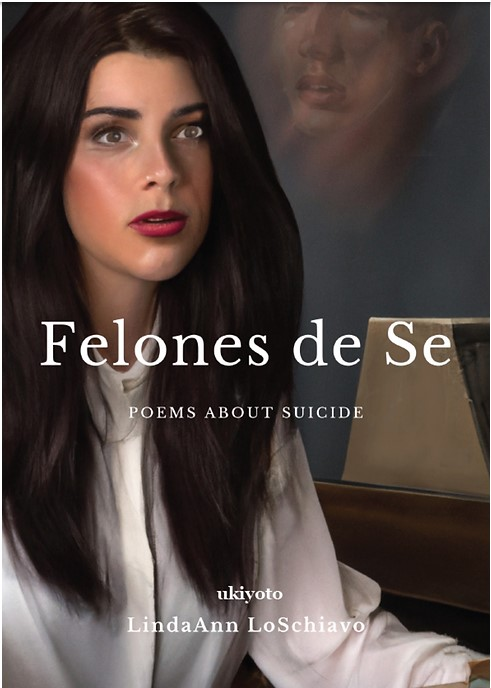
Several reader responses across GoodReads, Amazon, and independent blogs have profoundly affected me. Adam Fenner’s perceptive review particularly resonates: “The collection doesn’t follow a single form. Some poems are lyrical, others are prose-like. Some contain haiku embedded in narrative, while others stretch out like confessionals. The variation in style helps reflect the unpredictability of the subject. There’s no one way to die, and no one way to write about those who do. But what’s consistent is the voice—clear, measured, and always paying attention. That steadiness matters. Even when the poems describe moments of chaos or despair, LoSchiavo’s tone never turns exploitative or sensational. The voice gives space to each story, even the smallest one, and that respect shapes the reading experience.”
Both suicide collections function deliberately as memento mori—symbolic reminders of mortality’s inevitability—while simultaneously charting suicide ideation’s shadowed journey. Each poem’s subtext carries an implicit invitation: getting help and choosing life will represent the wiser path. When readers engage with these difficult themes and discover something meaningful within them, it affirms poetry’s unique power to illuminate even the grimest human impulses with dignity and compassion.
Finally, what would you like readers to take with them after reading this chapbook—not just about the poems, but about the role of poetry in tackling the human journey?
Poetry creates sacred space for difficult truths. With “Felones de Se: Poems about Suicide,” I wanted to restore dignity to lives often reduced to statistics or headlines. Each poem says: this person mattered.
What I hope readers take away is that poetry serves as both witness and restoration. It allows us to honor complexity rather than simplify it. When readers recognize authentic experience in my work—whether in this collection or in my sequel “Past Tense: Poems and Portraits of Suicides“—it creates a profound connection.
Beyond that, I am completing a new collection “Vampire Verses,” fully illustrated by Giulia Massarin. I also have a memoir poetry collection called “Cancer Courts My Mother“ [Prolific Pulse Press, November 2025], rooted in my mother’s final months when I was her caregiver and how illness reshapes a family’s dynamic.
In a world that turns suicide into either clinical data or spectacle, these poems offer something different: a quiet invitation to see the full humanity behind each life. This is poetry’s enduring gift: it doesn’t just help us understand the human journey—it helps us survive it.
Disclosure: This interview was conducted as part of a collaborative feature. The content and opinions shared are based on the interviewee’s personal experiences and expertise.
Links
- LindaAnn LoSchiavo’s Wikipedia page
- Felones de Se: Poems about Suicide on Goodreads
- Felones de Se: Poems about Suicide on Amazon.com
- Felones de Se: Poems about Suicide on Amazon.com.au
Help is available for you.
The following information may be helpful to you:
1. When in Australia, here’s the information from health.gov.au:
In case of emergency, dial 000.
For immediate assistance, support is accessible 24/7 across Australia. Reach out to:
- Lifeline: 13 11 14
- Kids Helpline: 1800 55 1800
- Mental Health Crisis Assessment and Treatment Team in your state/territory
- Beyond Blue: 1300 224 636
For urgent care, visit the emergency department at your local hospital.
2. Here are other links for important contact details in countries across the globe compiled by Wikipedia:
DISCLAIMER: Books for Humanity Global does not provide any form of professional advice. All content is for informational purposes only, and the views expressed are those of individual contributors and may not reflect the official position of Books for Humanity Global. While we strive for accuracy and adhere to editorial standards, we make no guarantees regarding the completeness or reliability of the content. Readers are encouraged to conduct their own research and seek professional assistance tailored to their specific needs. Any links included are for reference only, and Books for Humanity Global is not responsible for the content or availability of external sites. For more details, please visit our full Disclaimer, Privacy Policy, and Terms of Service.
Related
In the Shadows and Beyond: Robert A. Walker on Crafting the World of “Six Moons, Seven Gods”
What does craving a hot fudge sundae have to do with crafting a realm of magic and intrigue? Learn how in the interview with Robert A. Walker—read the full write-up.
Carolyn Summer Quinn: A Journey Through Storytelling and Showbiz in ‘Vanished on the Vaudeville Circuit
What if a simple coffee break could spark the idea for an award-winning book? Discover how Carolyn Summer Quinn’s creative journey unfolded in this revealing interview. Read on for details!
Something went wrong. Please refresh the page and/or try again.
General Site Disclaimer
The content on the Books for Humanity Global website is for general informational purposes only. We do not provide medical, legal, financial, or professional advice. Opinions expressed in reviews and articles are those of the authors and do not represent the official views of Books for Humanity Global. We are not liable for any decisions or actions taken based on the information provided. External links are for convenience only, and we are not responsible for their content.
For more details, please read our full Disclaimer, Privacy Policy, and Terms of Service.
Your continued use of the site constitutes acceptance of our policies, terms, and conditions.
Useful Links
- About Us
- Authors for Humanity
- Blog
- Book of the Week
- Book Offers
- Book Review Request Step 3
- Book Review Requests
- Book Wish List
- Contact us
- Disclaimer
- Our Sponsors
- Privacy Policy
- Subscribe to our newsletter
- Terms of Service
- Voices for Humanity
More from Books for Humanity Global

Lessons from Timeless Books: Empathy, Trust, and Moral Action
Can a simple story, a leadership book, or a hard-earned lesson quietly reshape how someone leads and treats others? This…
Keep reading
Ways to Use Books and Learning Initiatives in the New Year to Drive Meaningful Change in Underserved Communities Worldwide
What if finishing a book mattered less than what you did with one page of it? This roundup explores how…
Keep reading
How Christmas Stories Build Empathy
Why do stories told at Christmas linger longer in our hearts—and quietly change how we treat others afterward? Read on…
Keep reading
Book Review: Gray Wrath by Terrence Poppa
Gray Wrath is a stark reminder that even in the face of extinction, the bonds of survival, redemption, and unity…
Keep readingSomething went wrong. Please refresh the page and/or try again.
Related
Discover more from Books for Humanity Global
Subscribe to get the latest posts sent to your email.

 Books for Humanity Global
One thought on “Poetry as Witness: LindaAnn LoSchiavo on Reflecting Humanity Through Verse”
Comments are closed.