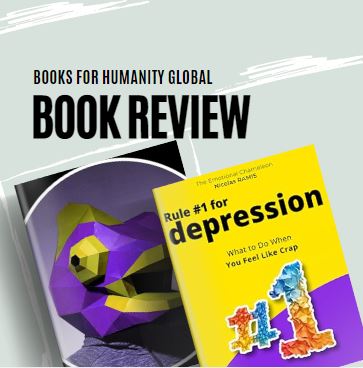
Rule #1 for Depression: How to Eliminate Negative Thinking and Rewire Your Anxious Brain with This Simple Depression Book by Nicolas Ramis
My rating: 5 of 5 stars
Empowerment through resilience.
The weight of depression can feel insurmountable, as if you’re trapped in a never-ending cycle of darkness and negativity. Scientific studies show that negative self-talk fuels depressive episodes by reinforcing feelings of worthlessness and despair. Nicolas Ramis taps into this pervasive problem with Rule #1 for Depression, a book that doesn’t just promise relief but offers a practical, empowering framework for conquering your inner critic. His message is simple but profound: the key to overcoming depression lies in uncovering your inherent worth and harnessing your resilience.
This book deftly combines personal insight with clinical techniques, laying out a roadmap to rewire your brain’s response to depression without relying on the all-too-common advice of positive thinking. Instead, Ramis highlights a crucial mental shift: silencing the destructive self-judgment and focusing on a deep, intrinsic understanding of self-worth. By linking self-compassion to resilience, the author opens up a new way to manage negative emotions and intrusive thoughts. Whether you’ve tried therapy or medication, Ramis presents something different—a psychological crowbar, as he calls it, that lifts you out of your mental rut.
What stood out most to me were the concrete strategies Ramis provides for calming the storm of depression. The 14-word mantra he introduces is deceptively simple yet powerful, offering a quick but effective way to combat spiraling thoughts. His candid discussion of how self-compassion can heal a broken self-esteem resonated deeply. Unlike many mental health guides, this book doesn’t shy away from difficult emotions, instead showing readers how to move through them toward healing. The intimate tone Ramis strikes makes even the most complex psychological concepts feel accessible.
If there is any area where the book could be improved, it would be in expanding certain sections to include more detailed case studies that apply these techniques in real-world scenarios. Readers struggling with depression may benefit from seeing more varied examples of the methods in practice.
This book is not for those seeking a light read or a quick fix. It demands introspection and effort, making it better suited for individuals truly ready to face their mental health struggles head-on. On the other hand, those who feel trapped by their depressive thoughts and are looking for a transformative approach to self-healing will find this book invaluable. In terms of style and impact, Ramis’ approach calls to mind the deeply compassionate and practical work of Brene Brown, particularly in its emphasis on self-worth and vulnerability as tools for emotional survival.
Reading Rule #1 for Depression is like finding a flashlight in the dark—a burst of clarity that guides you out of the maze of self-doubt and mental fatigue.
General Site Disclaimer
The content on the Books for Humanity Global website is for general informational purposes only. We do not provide medical, legal, financial, or professional advice. Opinions expressed in reviews and articles are those of the authors and do not represent the official views of Books for Humanity Global. We are not liable for any decisions or actions taken based on the information provided. External links are for convenience only, and we are not responsible for their content.
For more details, please read our full Disclaimer, Privacy Policy, and Terms of Service.
Your continued use of the site constitutes acceptance of our policies, terms, and conditions.
Useful Links
- About Us
- Authors for Humanity
- Blog
- Book of the Week
- Book Offers
- Book Review Request Step 3
- Book Review Requests
- Book Wish List
- Contact us
- Disclaimer
- Our Sponsors
- Privacy Policy
- Subscribe to our newsletter
- Terms of Service
- Voices for Humanity
More from Books for Humanity Global

Lessons from Timeless Books: Empathy, Trust, and Moral Action
Can a simple story, a leadership book, or a hard-earned lesson quietly reshape how someone leads and treats others? This…
Keep reading
Ways to Use Books and Learning Initiatives in the New Year to Drive Meaningful Change in Underserved Communities Worldwide
What if finishing a book mattered less than what you did with one page of it? This roundup explores how…
Keep reading
How Christmas Stories Build Empathy
Why do stories told at Christmas linger longer in our hearts—and quietly change how we treat others afterward? Read on…
Keep reading
Book Review: Gray Wrath by Terrence Poppa
Gray Wrath is a stark reminder that even in the face of extinction, the bonds of survival, redemption, and unity…
Keep readingSomething went wrong. Please refresh the page and/or try again.
Related
Discover more from Books for Humanity Global
Subscribe to get the latest posts sent to your email.

 Books for Humanity Global
It can be very hard to feel self-compassion, especially when depression often impairs our ability to function, for example, at work. It can also make us irritable. All of this feeds a cycle of despair. What an interesting approach!
LikeLike