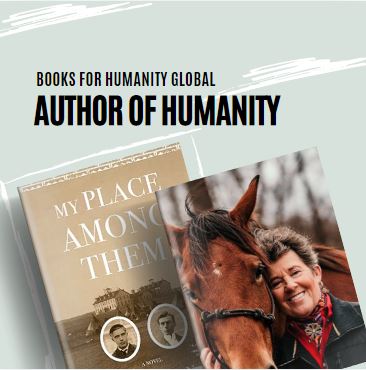
J. Stanion provides a viewpoint rooted in both history and the complexity of the human experience through his historical fiction, especially in My Place Among Them. In the aftermath of the Wounded Knee Massacre, her story intertwines the lives of a government instructor named Carter Heath and a young Lakota boy named John Iron Horse. In addition to highlighting the difficulties faced by Indigenous people, this investigation of forced assimilation poses more general queries on the relationship between culture, identity, and power.
The humanity within this story, exemplified by the bond between John and Carter, transcends the political and social constructs of the time. Their relationship serves as a focal point for examining the emotional and moral conflicts inherent in such a turbulent historical period. It demonstrates that, regardless of background or heritage, human connection can persist even in the face of systemic injustice.
In this interview, J. Stanion shares insights into how her personal family legacy shapes her storytelling and how she incorporates historical accuracy into her fiction. Her unique blend of family history and cultural heritage adds depth to her novels, offering readers a poignant and reflective experience rooted in both fact and emotion.
BFH: Your writing often intertwines family history with historical events. How do you approach blending personal family legacy with broader historical contexts in your stories?
JS: That’s an easy one for “My Place Among Them” because it was personal family experiences set in an important historical context to begin with. There were times when it would have been easy to make the story a little more “sensational,” perhaps by slanting one of the characters one way or another. I could have made Carter more career-oriented and greedy. I could have made John bitter towards every white man he encountered. But neither would have been true to our family. All I had to do was remember the gleam in my father’s eyes when he described his grandfather’s battles with the government, and I knew how the plot had to flow.
BFH: Can you describe the process you use to research historical events and integrate them with your family’s historical narratives?
JS: During Covid, research was very limited. I purchased over 50 books (new and old) about the Lakota people, their culture and heritage, and the massacre at Wounded Knee. I also spent a great deal of time on the internet browsing archival photographs and records from the various Indian Schools. Thankfully, I had many of my great-grandfather’s employment records, letters, and photographs, so it was fairly easy to merge the two.
BFH: How does your family’s history inspire the characters and plots in your historical fiction?
JS: In this particular novel, “My Place Among Them,” the characters and plot are my family history, albeit embellished with conversations and details that are not part of the records.
BFH: Your multi-award-winning book is celebrated for its historical accuracy and engaging storytelling. How did you balance historical detail with personal family history to achieve this acclaim?
JS: Again, in “My Place Among Them,” the characters and plot are my family history, although I took literary license for the words and details of individual characters and exchanges between them to fill in the details for my readers.
BFH: Are there specific family stories or historical events that particularly inspire your novels? Can you share an example of how one of these elements made its way into your writing?
JS: My grandmother was baptized in the Holy Cross Church, where the survivors of Wounded Knee, both red and white, were carried after the smoke cleared that fateful December day. The history of that place had a profound effect on my great-grandfather.
BFH: What challenges have you faced when merging family history with historical events, and how have you addressed them in your work?
JS: There was one particular detail that, because of cultural traditions at the time, could have been depicted two different ways. Some, especially some in my own family, disagreed with the choice I made. But, peoples’ positive reactions to the book have been phenomenal, so I have to believe I made the right choice.
BFH: How do you ensure historical accuracy while incorporating personal and family elements into your narratives?
JS: For “My Place Among Them,” I depended on communication with actual people: Lakota elders, an archival librarian on the reservation, a Lakota Ledger Artist, and others with experience on the reservations to review my writing. First and foremost, I didn’t want to print anything that might offend the Lakota people by being an inaccurate portrayal of their experiences.
BFH: In what ways do you think your family legacy adds a unique perspective to the historical fiction genre?
JS: The first hurdle I encountered in my writing journey for “My Place Among Them” was when a literary agent suggested that I, as a white woman, couldn’t tell the story of an Indigenous boy in a book. In fact, I felt that both the time that had passed and my experience with family who held the Indigenous people of America in high regard was the perfect reason for me to tell this story at this time.
BFH: How has writing historical fiction rooted in family legacy influenced your understanding of both history and your own family’s past?
JS: In researching my husband’s family prior to applying for our farm to be considered for listing on the National Register of Historic Places, I spent hours listening and taking notes from every family member about their memories of events on the farm over the years. It was amazing how different the stories were, especially about specific important events. I came to understand that the truth of history comes where those stories overlap—where words and events are not blurred by personal feelings. That’s why my “motto” is “History belongs to those who write it.”
BFH: Looking ahead, are there new historical events or family stories you’re excited to explore in your future writing projects?
JS: I am definitely looking forward to writing a story about a multifamily, multigenerational farm. I just haven’t decided yet if it will be more like “Little House on the Prairie” or “Dallas!”
Author’s Bio
J. Stanion is a distinguished author of the award-winning and bestselling My Place Among Them, a novel recognized for its vivid depiction of Indigenous history. The book has earned the BREW Seal of Excellence, the 2023 NYC Big Book Award for Cultural Heritage, and the 2024 Silver Medal Global Book Award for Literary Heritage. It tells the story of John Iron Horse, a twelve-year-old Wounded Knee massacre survivor.
After 31 years of teaching, J. Stanion fulfilled her late father’s wish by publishing her debut novel. She now lives on a family cattle farm, caring for animals, including seven horses and a three-legged dog. In her free time, she enjoys collecting Pine Ridge Pottery, ledger art, and turquoise jewelry. She is currently at work on her second novel, which may explore historical themes or life on the farm.
J. Stanion’s media appearances include Newsweek, MSN News, Big News Network, The World’s Best Magazine, The Chrysalis BREW Project, FOX 40, Vents Magazine, Benzinga, Digital Journal, Google News, Bing News, Yahoo News, and hundreds more of other sites.
You can find My Place Among Them on Amazon and discover more about her work at www.jstanion.com, where you can also view her blog and examples of ledger art.
General Site Disclaimer
The content on the Books for Humanity Global website is for general informational purposes only. We do not provide medical, legal, financial, or professional advice. Opinions expressed in reviews and articles are those of the authors and do not represent the official views of Books for Humanity Global. We are not liable for any decisions or actions taken based on the information provided. External links are for convenience only, and we are not responsible for their content.
For more details, please read our full Disclaimer, Privacy Policy, and Terms of Service.
Your continued use of the site constitutes acceptance of our policies, terms, and conditions.
Useful Links
- About Us
- Authors for Humanity
- Blog
- Book of the Week
- Book Offers
- Book Review Request Step 3
- Book Review Requests
- Book Wish List
- Contact us
- Disclaimer
- Our Sponsors
- Privacy Policy
- Subscribe to our newsletter
- Terms of Service
- Voices for Humanity
More from Books for Humanity Global

Lessons from Timeless Books: Empathy, Trust, and Moral Action
Can a simple story, a leadership book, or a hard-earned lesson quietly reshape how someone leads and treats others? This…
Keep reading
Ways to Use Books and Learning Initiatives in the New Year to Drive Meaningful Change in Underserved Communities Worldwide
What if finishing a book mattered less than what you did with one page of it? This roundup explores how…
Keep reading
How Christmas Stories Build Empathy
Why do stories told at Christmas linger longer in our hearts—and quietly change how we treat others afterward? Read on…
Keep reading
Book Review: Gray Wrath by Terrence Poppa
Gray Wrath is a stark reminder that even in the face of extinction, the bonds of survival, redemption, and unity…
Keep readingSomething went wrong. Please refresh the page and/or try again.
Discover more from Books for Humanity Global
Subscribe to get the latest posts sent to your email.

 Books for Humanity Global